An Introduction to EPM Data Management
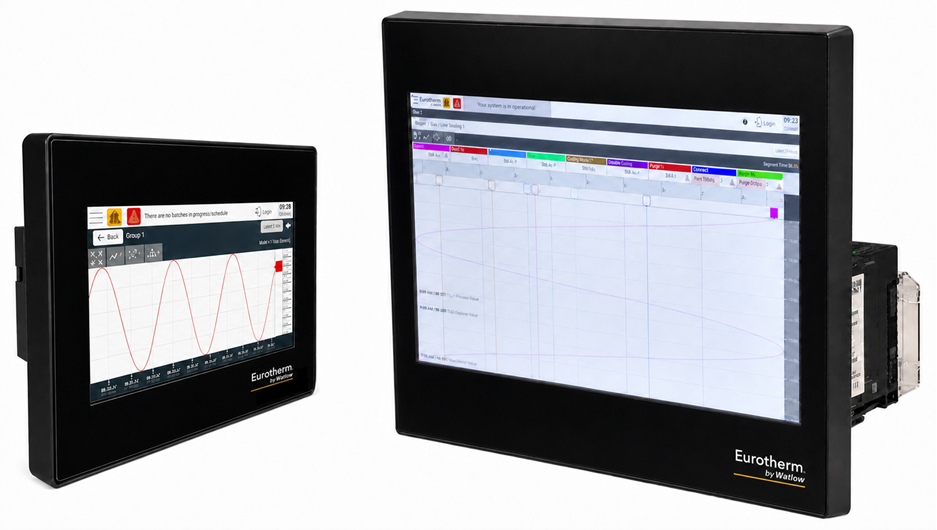
EPM Data Management is an industrial paperless graphic recording platform with modular I/O, a built-in configuration and operational interface based on Web technologies, a responsive human machine interface (HMI) and advanced connectivity. This is the first release of a suite of interoperable industrial solutions.
Data is valuable, whether for internal monitoring, for example, accounting or continuous improvement of processes, or for external legislation, for example:
-
Manufacturing pharmaceutical products,
-
Sterilization of medical equipment, proving that it has been heated to the correct temperature to kill bacteria before reuse,
-
Heat treatment of metals for use in aircraft, proving the metal was heated to the correct temperature for the part being manufactured, or
-
Other products, such as food, which may have regulations surrounding them, for example, the pasteurization of milk.
Some records may only be needed for a day or two after manufacturing or processing date, but others may need to be retained for decades. Either way, the cost of losing a record can be high, for example, if the records of a batch of pharmaceutical product are lost or corrupted, the entire batch may have to be scrapped.
Records protect both the consumer and the manufacturer, giving clear traceability that procedures and processes were adhered to.
The types of data EPM Data Management records include:
-
Process values, for example, sterilizer temperatures.
-
Derived values using mathematical terms, for example, Mean Kinetic Temperature (MKT) / F-Value.
-
Metadata,the descriptive statistical information about the elements of a set of data, for example, alarm data, operator notes, and audit trail information, that accompanies a data file.
With every cycle of the recorder, EPM Data Management records data to its internal flashmemory. This creates files with a.uhh extension.
What does EPM Data Management Record?
EPM Data Management records from configured channels which can be hardwired measurements from a process, mathematically derived values or information received via communication networks. Channels can be grouped into up to 30 user defined groups, each of which can contain different channels, hardwired, mathematically derived or via communications, different recording rates, trend speeds and archiving protocol:
-
Input Channels - EPM Data Management can have multiple channels depending on the version of device and type of modules being used. Each input channel is configurable within EPM Data Management.
-
Analog Inputs - These are measured inputs which can be configured to accept various types of measured data, for example, mA, mV, V, thermocouple, resistance temperature detector (RTD) and ohms.
-
Digital Inputs - These can be used to signify something has happened in the process, for example, a door opening, they can be a contact closure or the change in a logical voltage signal.
-
-
Output Channels - EPM Data Management can have relay channels configured. A relay output could, for example, trigger an external alarm or event outside of the recorder. An analog output can retransmit any internal Analog value in the device out to another device, for example, to an indicator device or a controller. An output channel can be added to a recording group if required, but as they are usually driven by the results of another channel or function, this would not be standard practice.
Please be aware of the following:
-
This help center uses screen shots from the EPM-15 device for demonstration purposes, see The Differences between EPM-07 and EPM-15 for details if you are using an EPM-07.
Last update - January 2026